Open Access Week 2026: The Cost of Knowledge and Why Access Matters
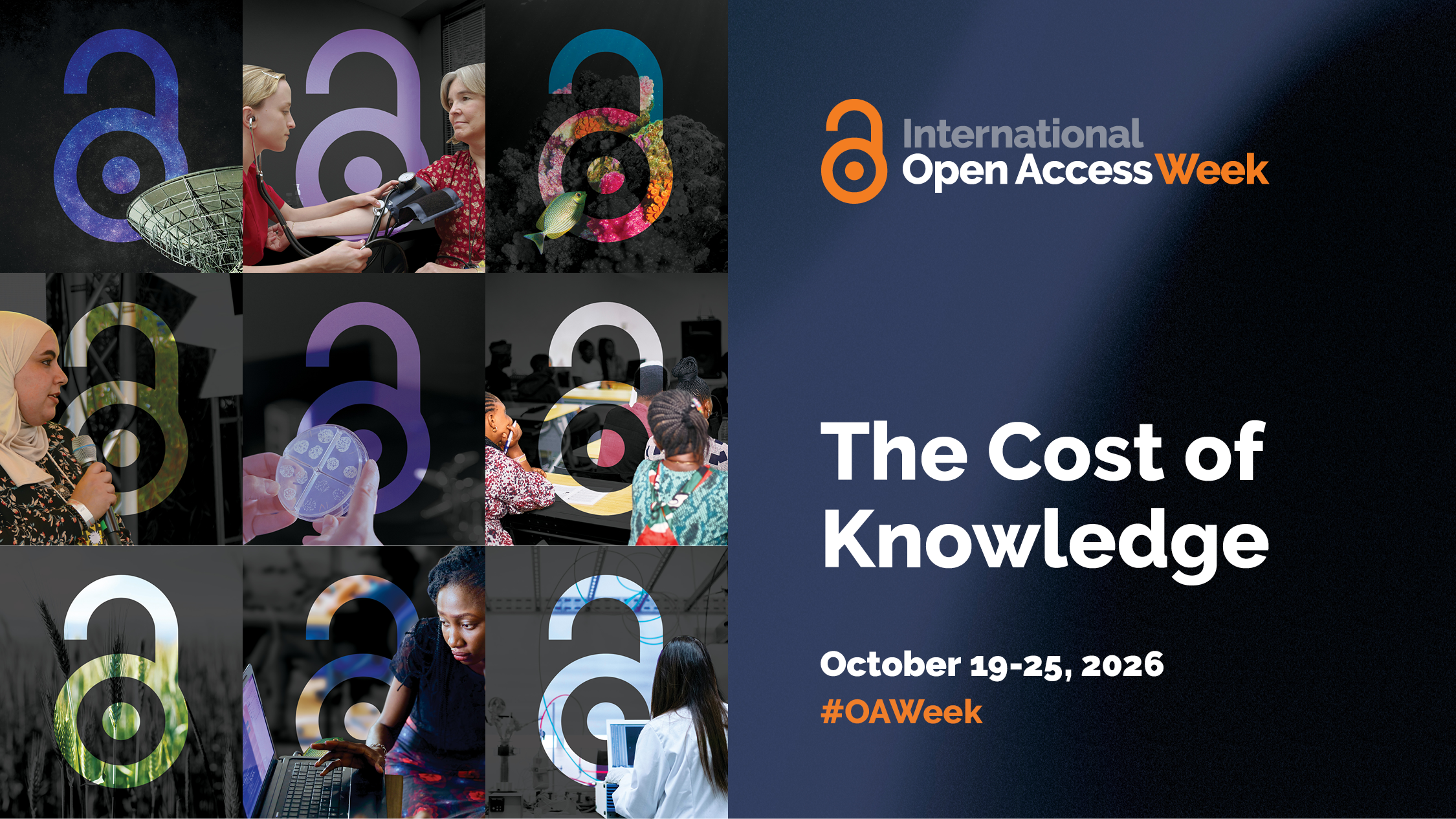
International Open Access Week is almost here! From October 19–25, libraries, researchers, and institutions around the world will come together to discuss how research is shared, who can access it, and what we can do to make scholarly knowledge more widely available.
This year’s theme, The Cost of Knowledge, asks us to consider the financial, human, and environmental costs of creating, sharing, and sustaining knowledge. Those costs take different forms. Journal subscriptions can limit who has access to published work, while article processing charges (APCs) can make open-access publishing difficult for researchers without sufficient funding. There is also a cost when research remains out of reach of people who could learn from it or build on it.
Making research openly available can help expand that reach. A 2024 study published in Scientometrics found that open-access publications were cited by researchers from a wider variety of institutions, countries, and scientific fields. This association was stronger for work shared through repositories than for work made open on publishers' websites.
But does paying more to publish openly lead to more citations? A 2024 study published in PeerJ examined that question. It analyzed more than 146,000 biology articles in 152 hybrid journals, which offer both subscription and open access options. The study found that open-access articles generally received more citations than articles behind paywalls, but paying higher publishing fees wasn't associated with receiving more citations.
These studies suggest that open access can help research reach more people and potentially earn more citations. But the benefits may vary by field, and neither study proves that open access itself caused those differences.
Papers aren't the only research products that people can build on. In ocean science, shared data can have a long life of its own. In ocean science, shared data can have a long life of its own. A 2014 study in PLOS ONE examined three widely used oceanographic datasets curated by NOAA. One of them, the World Ocean Atlas and Database (a global collection of ocean measurements), was cited by more than 8,000 articles between 1984 and 2013. The study also found that many articles mentioned datasets without formally citing them, suggesting that even this figure may underestimate how widely the data were used.
The MBLWHOI Library supports this kind of research sharing through two repositories. The Woods Hole Open Access Server (WHOAS) provides a way to share eligible scholarly publications, while the MBLWHOI Library Dataverse supports the sharing of research datasets. Both help make scientific work easier to find and available for others to use.
Openness does take resources. Repositories need ongoing support, and preparing research data for reuse takes time and effort. That work is what keeps publications and datasets available long after the original research is completed, so others can keep learning from them and building on them. Which brings us back to this year’s theme: sharing knowledge has costs, but so does keeping it out of reach.
Learn more about International Open Access Week and explore events being held virtually and in person throughout the week.
Questions for the library? Email us at library@mbl.edu or dla@whoi.edu.